Idea Statica
  • Steel
  • Concrete
  • BIM & workflows
  • Support & Learning
  • Pricing
  • Company
  • Steel overview
  • Connection design
  • Member design
  • Parametric design
  • Steel case studies
  • Concrete overview
  • Walls and D-regions
  • Anchoring design
  • Members & cross-sections
  • Concrete case studies
  • BIM overview
  • Supported integrations
  • Checkbot
  • Viewer
  • APIs
  • Support Center
  • E-learning & certification
  • Blog
  • Downloads & Licensing
  • Plans
  • Free community tool
  • Enterprise customers
  • Students & educators
  • How much will you save?
  • About us
  • Contact
  • Research & development
  • Authorized resellers
  • Meet our customers
  • Career
  • Steel
    Steel overviewConnection designMember designParametric designSteel case studies
  • Concrete
    Concrete overviewWalls and D-regionsAnchoring designMembers & cross-sectionsConcrete case studies
  • BIM & workflows
    BIM overviewSupported integrationsCheckbotViewerAPIs
  • Support & Learning
    Support CenterE-learning & certificationBlogDownloads & Licensing
  • Pricing
    PlansFree community toolEnterprise customersStudents & educatorsHow much will you save?
  • Company
    About usContactResearch & developmentAuthorized resellersMeet our customersCareer
14-Day Trial
14-Day Trial
  • Steel
  • Concrete
  • BIM & workflows
  • Support & Learning
  • Pricing
  • Company

Subscribe to our newsletter

Company

  • About us
  • Partners
  • Careers
  • Patent

Resources

  • Customer projects
  • Case studies
  • Connection Library
  • Verification books

Legal

  • EULA
  • Global privacy policy
  • California Privacy
  • TOS Viewer
  • Licensing

Help

  • Contact
  • Quote request
  • Resellers
  • Downloads
FacebookInstagramLinkedInYouTube

© IDEA StatiCa 2009-2026

Trusted and used worldwide by engineers, fabricators & consultants.

Support CenterKnowledge Base ArticlesSeismic Design of Connections
Seismic Design of Connections
SteelConnection designKnowledge baseConnectionBolts

Seismic Design of Connections

This article is also available in
ENCZDEESFRITPTNLHUROKRPLTHTRVIZH

When designing structures for seismic, it is necessary to ensure that the building will behave as intended during earthquakes. This means that the structure should not only be designed to prevent collapse but also yield in a predictable way. Connections play a critical role in this process.

Seismic design

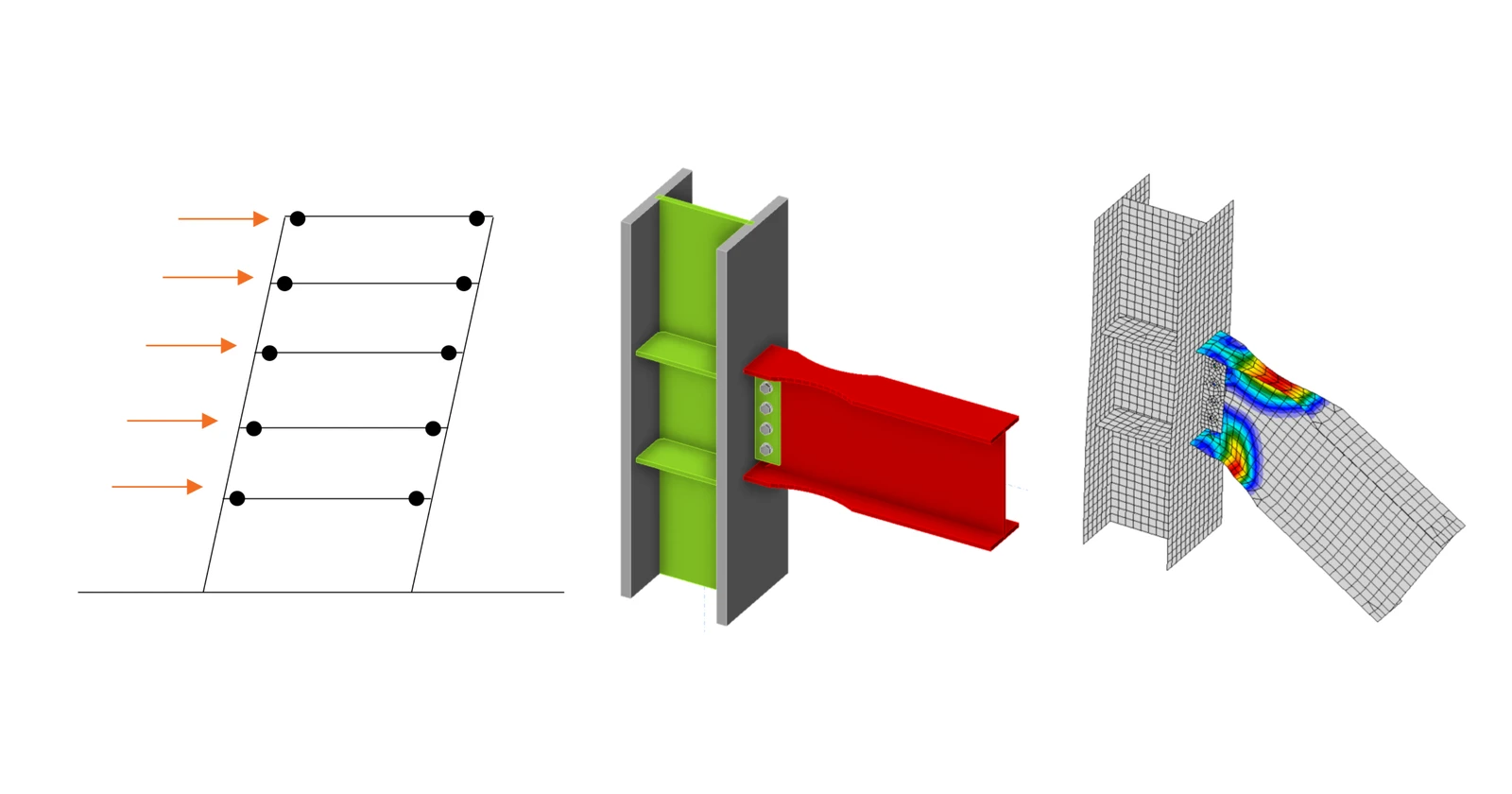
In seismic design, the objective is not simply to prevent structural collapse but also to ensure that the structure performs in a predictable and controlled manner, even when subjected to strong ground motion. Engineers must ensure that the building goes to controlled yielding mechanism, where selected parts of the structure are allowed to yield, deform, and dissipate energy, without compromising overall stability.

Lateral resisting system

Engineers can decide which type of lateral resisting system to implement. Each system has their specific controlled yielding mechanism which the engineer must ensure that their structure will behave as such.

  • Moment Frames (MF): yielding must occur in beams
  • Concentric Braced Frames (CBF): yielding must occur in bracings
  • Eccentric Braced Frames (EBF): yielding must occur in the link elements
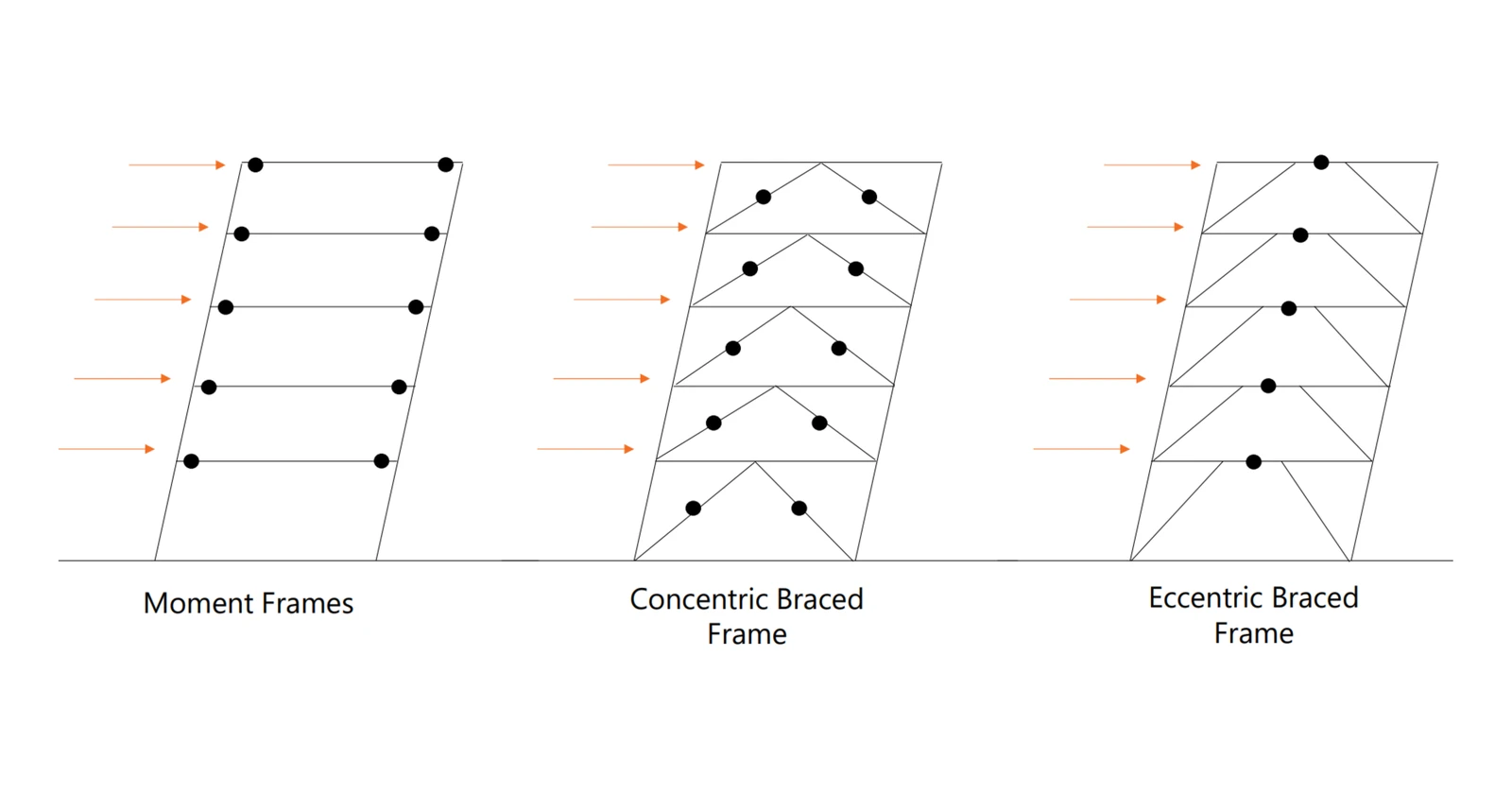
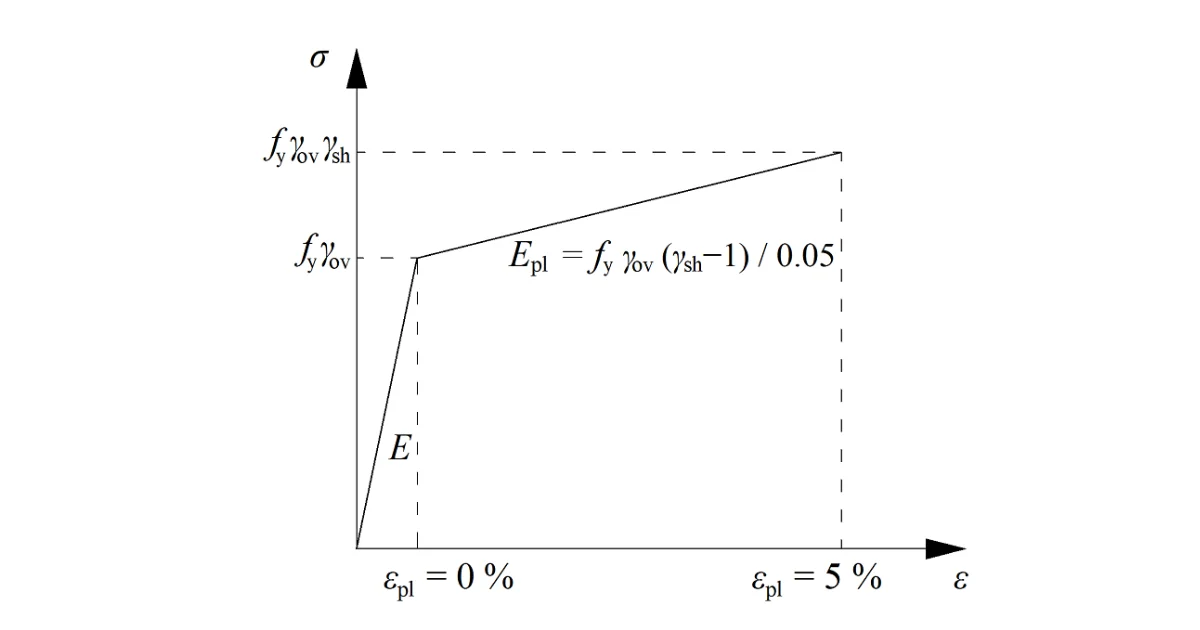
To reach the intended yielding mechanism, engineers apply capacity design principles. The dissipative items are designed to yield during earthquakes. Their expected strength is amplified by an overstrength factor to account for the actual material capacity and strain hardening. The non-dissipative items (such as columns, joints, and connections) are then designed to resist this amplified force elastically. This ensures that yielding occurs only at the intended locations. Connection design plays a key role in achieving this goal.

Connection design

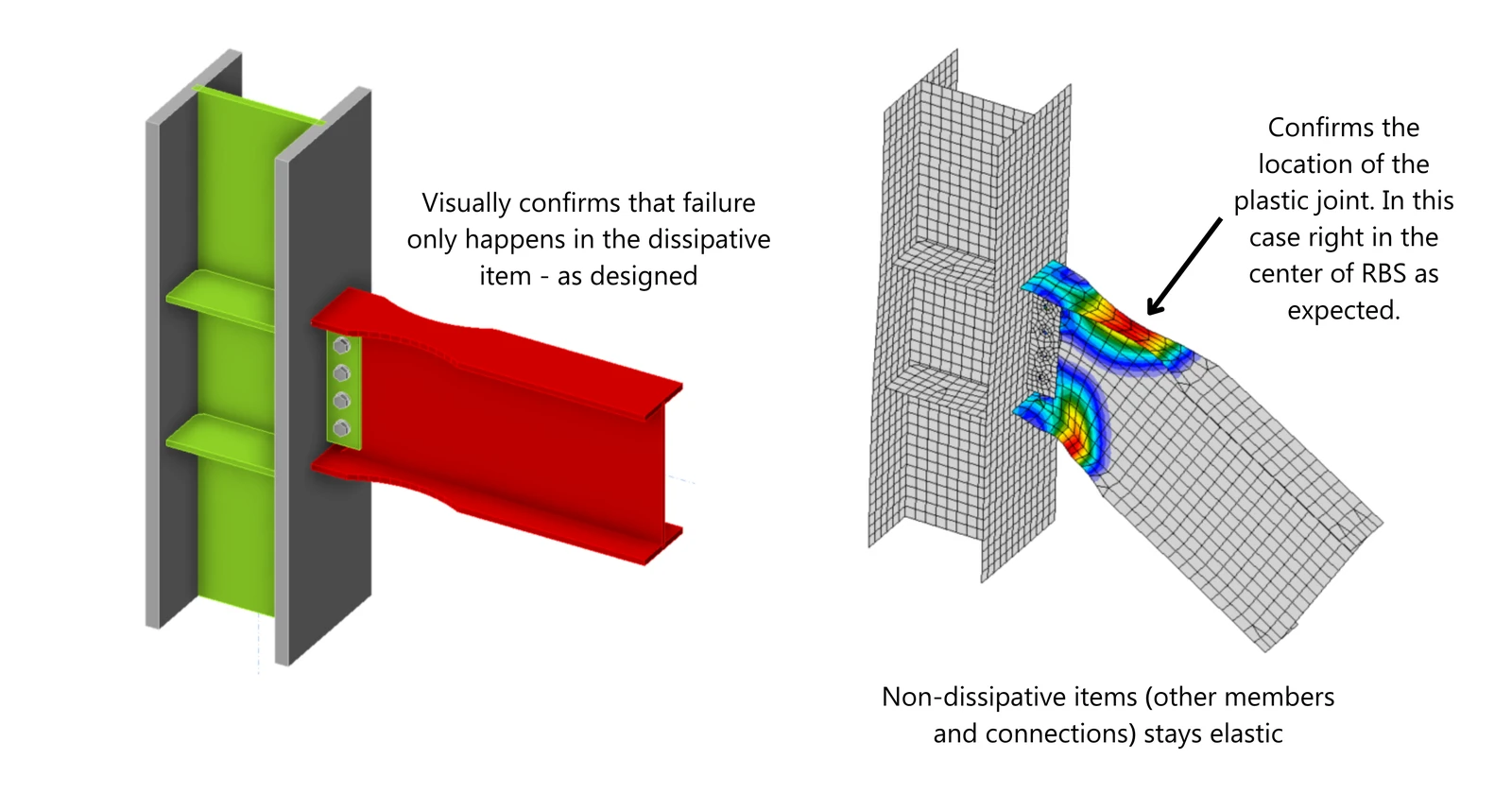
By properly detailing connections, engineers can ensure that plasticity develops in predefined zones such as beam ends or brace elements.

Although codes and design guides provide formulas to ensure yielding occurs in the intended elements, these checks can be complex, system-specific and connection-specific. This means that the engineer has to create separate spreadsheets for each system and connection. In addition, once the design is complete, traditional methods offer no direct way to visualize how a connection behaves under seismic loads or where plasticity develops. Furthermore, if the connection is not covered by design guides, the engineer is left without clear directions.

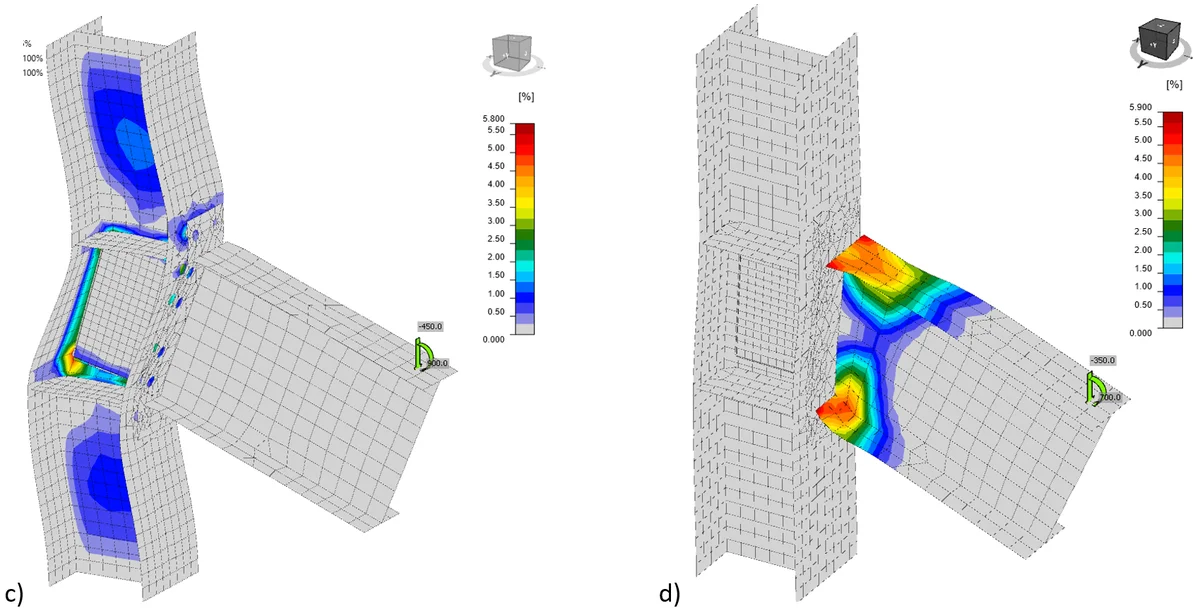
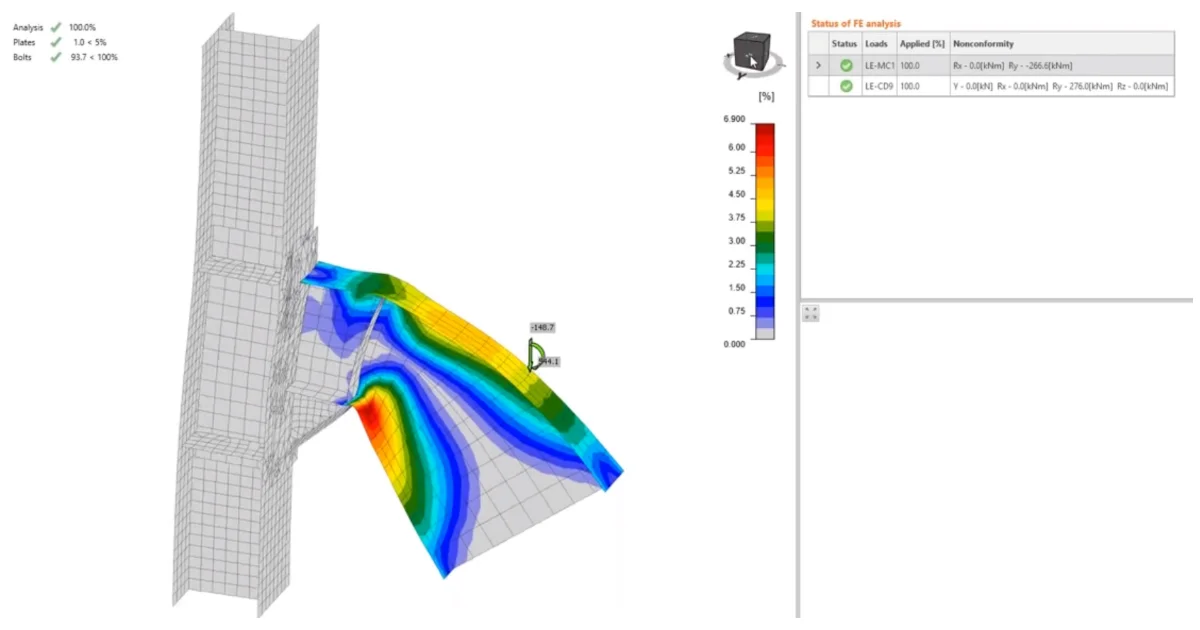
IDEA StatiCa simplifies this process by offering a single platform for designing and checking connections across all lateral resisting systems. This not only verifies the design according to capacity design principles but also allows the engineer to visually identify where yielding occur, making seismic connection design more intuitive and accurate.
Conclusion

It is important to correctly detail a structure to achieve the intended yielding mechanism. While design codes and guides provide comprehensive formulas and procedures, they are often lengthy and system-specific. IDEA StatiCa streamlines this process by enabling engineers to perform capacity design checks for various structural systems within a single platform.

Let's see how IDEA StatiCa can help you in each scenario

  • Detailing of Moment Frames using Prequalified Connections - AISC
  • Eurocode (coming soon)
  • Indian Standard (coming soon)
  • Australia (coming soon)

Related articles

Prequalified joints for seismic applications
  • Steel
  • EN (Eurocode)
  • CBFEM
  • Bolts
  • Plates
  • Seismicity
  • Connection
  • +7
  • Steel
  • EN (Eurocode)
  • CBFEM
  • Bolts
  • Plates
  • Seismicity
  • Connection

Verifications

Prequalified joints for seismic applications

Read more
Capacity design analysis to deal with seismics
  • Steel
  • Connection
  • AISC (USA)
  • CBFEM
  • Capacity design
  • Moment Connection
  • Seismicity
  • EN (Eurocode)
  • +8
  • Steel
  • Connection
  • AISC (USA)
  • CBFEM
  • Capacity design
  • Moment Connection
  • Seismicity
  • EN (Eurocode)

Knowledge base

Seismic analysis in IDEA StatiCa Connection

Read more
The objective of capacity design is to confirm a building undergoes controlled ductile behavior in order to avoid a collapse in a design-level earthquake. Structural design of welded and bolted connections.
  • Steel
  • Connection
  • AISC (USA)
  • AS (Australia)
  • CSA (Canada)
  • EN (Eurocode)
  • IS (India)
  • GB (China)
  • HKG (Hong Kong)
  • CBFEM
  • Seismicity
  • SP 16 (Russia)
  • +12
  • Steel
  • Connection
  • AISC (USA)
  • AS (Australia)
  • CSA (Canada)
  • EN (Eurocode)
  • IS (India)
  • GB (China)
  • HKG (Hong Kong)
  • CBFEM
  • Seismicity
  • SP 16 (Russia)

Knowledge base

Steel connection capacity design

Read more