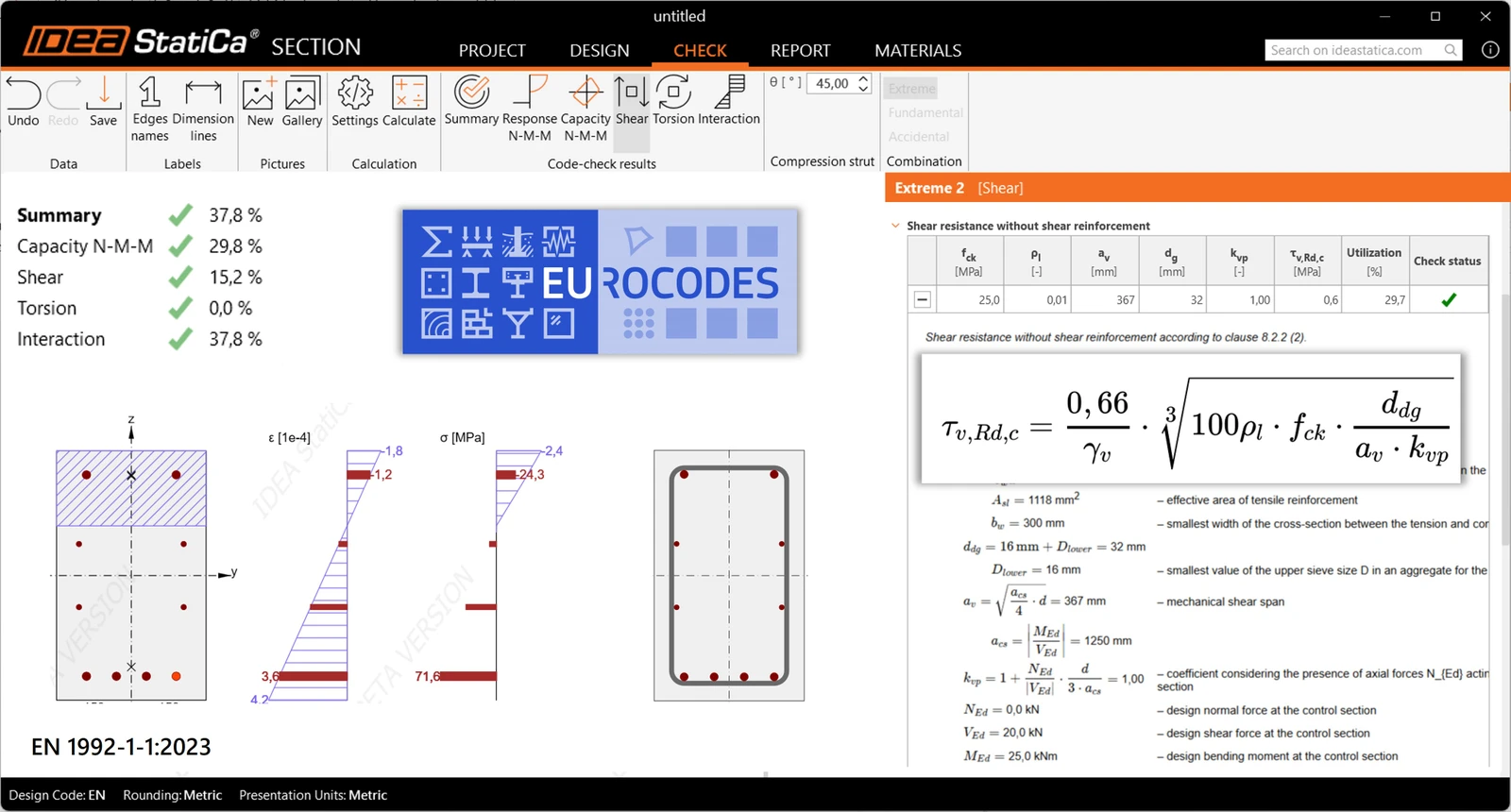


The new Eurocode is intended to improve ease of use and bring outdated knowledge up to date. At the same time, the standard has grown in scope, in part because the existing parts EN 1992-1-1, EN 1992-2, and EN 1992-3 have been merged. In addition to these changes, there are also significant changes in content. This article does not cover all the changes, but highlights a few key points regarding materials and shear force verification.
Materials and Design Values
The determination of the design value of the concrete compressive strength (fcd) is a change that recurs throughout the standard. The new expression is:
; where
The factor is eliminated and replaced by two correction factors. is a factor that reduces the calculated strength value above C40/50. is a factor that accounts for the influence of the load duration.
In addition, the bilinear stress-strain diagram is no longer used, and calculations must now be performed using only the parabolic-rectangular diagram or the constant block diagram.
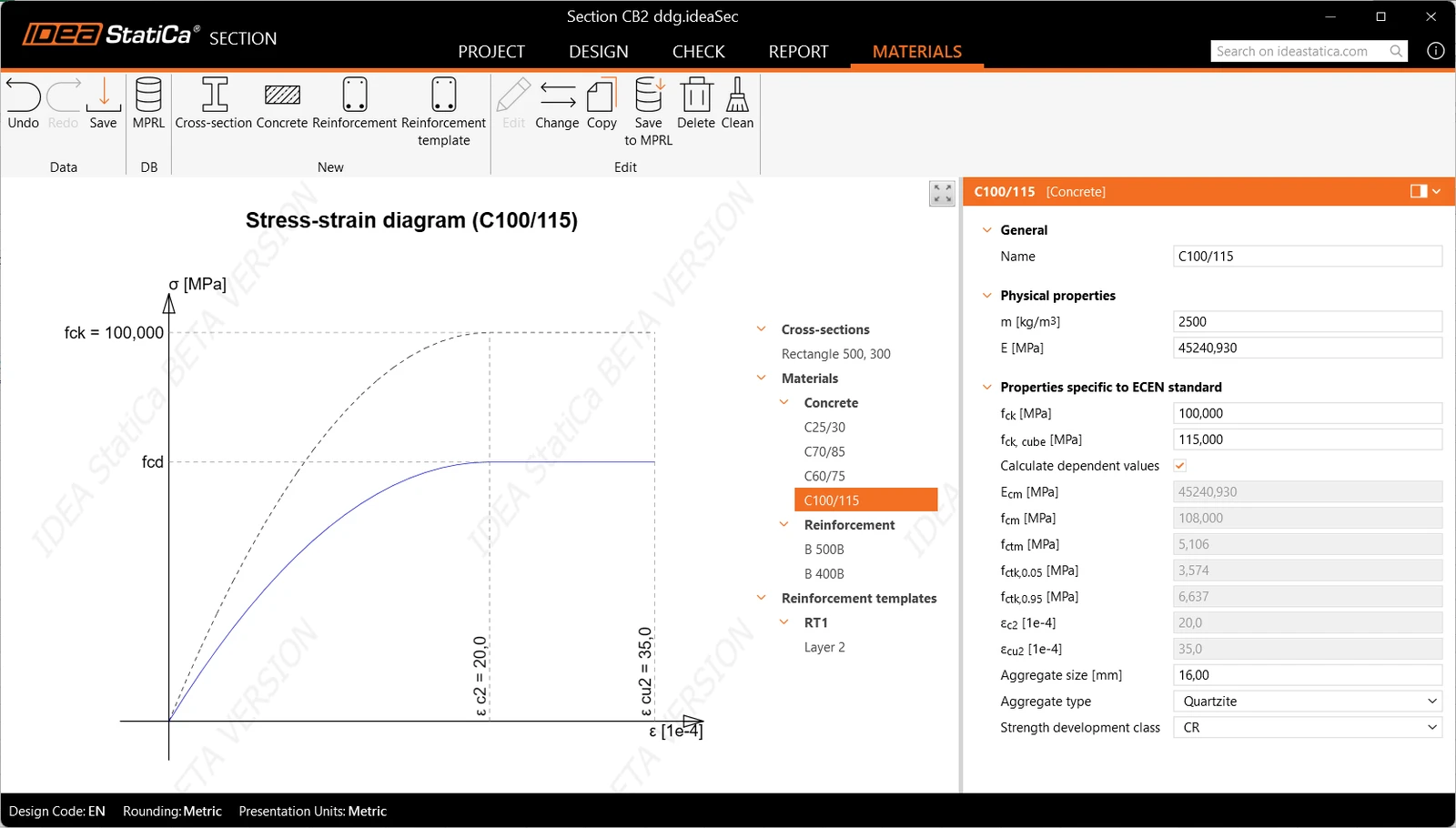
Figure 1: Parabolic-rectangular stress-strain diagram for concrete under compression in IDEA StatiCa Section.
Furthermore, the table of concrete strength classes has been streamlined, and all strain values have been removed. At the same time, C100/115 has been added due to the increasing use of high-strength concrete.
Shear capacity without stirrups
New formulas have been included for members without shear reinforcement. Compared to the current Eurocode, the expression has changed significantly, both for shear and punching shear. Furthermore, the resistance is now expressed as stress (N/mm²) rather than as force (kN).
Let’s take a closer look at the shear force check. Below are the formulas for shear force resistance for members that do not require designed shear reinforcement from EC2:2004 and EC2:2023.
EN 1992-1-1:2004, § 6.2.2
EN 1992-1-1:2023, § 8.2.2
The first noticeable change is the new partial factor for shear and punching without shear reinforcement (γV = 1.40). The term , which accounts for the effect of the longitudinal reinforcement and the concrete compressive strength , remains unchanged. A new term is (ddg/d), where d is the effective depth and ddg is the grain parameter.
In EC2:2023, the effective depth d is incorporated into the formula differently to account for the scale effect more accurately. As a result, the concrete capacity is lower compared to EC2:2004, especially for elements with a large effective depth. As a result, shear reinforcement must be provided sooner.
In addition to the effective depth, there is also the new parameter ddg, which describes the roughness of the critical crack. This depends on the concrete type and the properties of the aggregate.
ddg (mm) may be assumed to be:
Dlower is the lower limit of the upper sieve size of the coarsest aggregate fraction. The coarser the aggregate, the higher the shear friction (aggregate interlock) and thus the shear capacity. Figure 2 shows that for larger ddg values (24, 32, 40), a higher shear resistance τRd,c can be achieved.
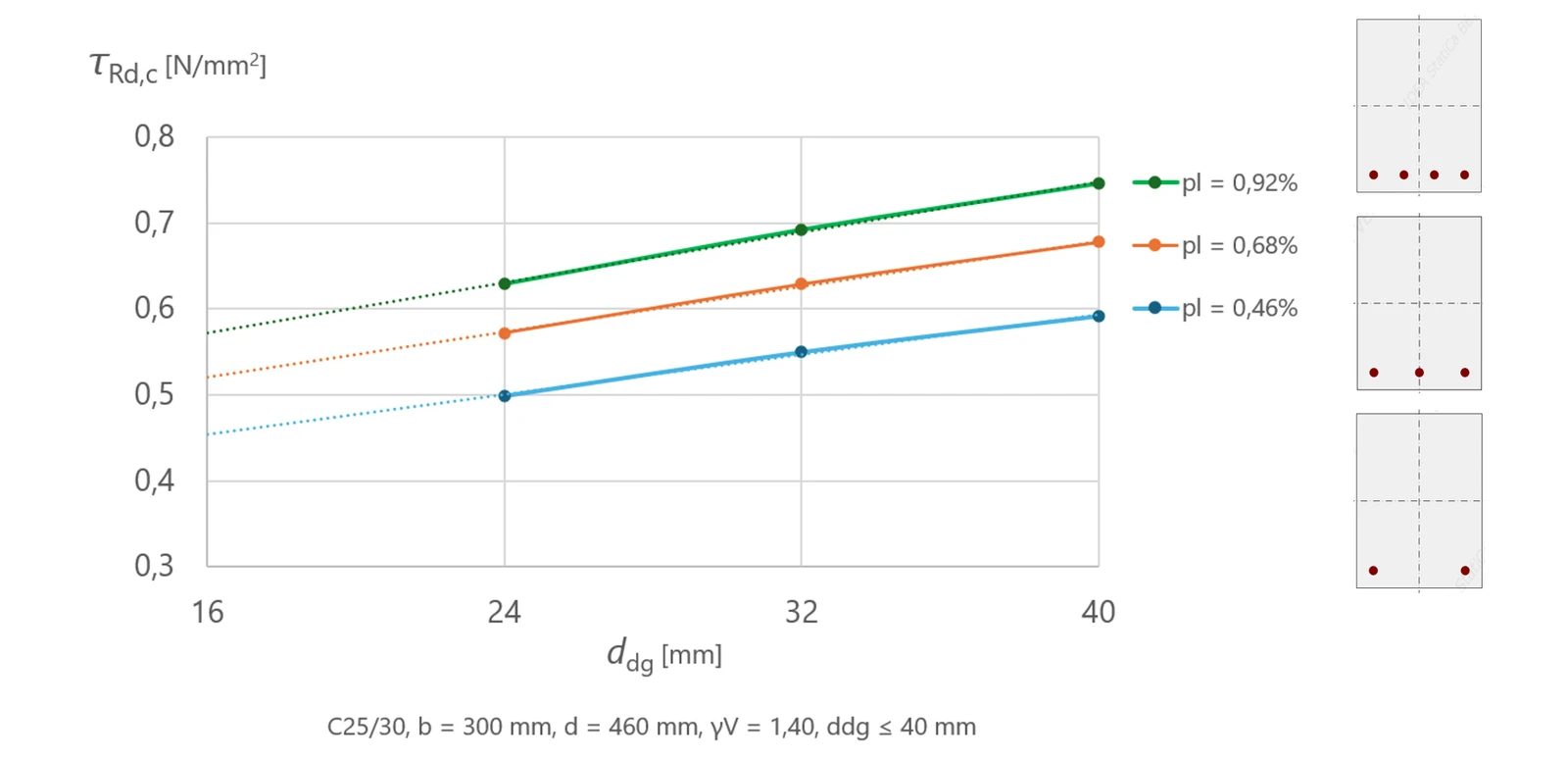
Figure 2: Shear resistance τRd,c as a function of the grain parameter ddg, for three longitudinal reinforcement ratios.
In addition to the aggregate, the concrete compressive strength and the longitudinal reinforcement also have a direct influence on the shear capacity of the cross-section. These parameters interact and partially compensate for one another. You cannot understand this interaction simply by reading the formula; you must also be able to calculate with it.
IDEA StatiCa Section performs calculations according to the new Eurocode 2
To support structural engineers in the transition to the 2nd generation of Eurocodes, IDEA StatiCa is introducing the IDEA StatiCa Section application. This application supports the design and verification of reinforced concrete cross-sections in accordance with EN 1992-1-1:2023. Section is more than just a tool for verifying concrete cross-sections and getting a green checkmark. It’s also a resource to help you truly understand the new rules.
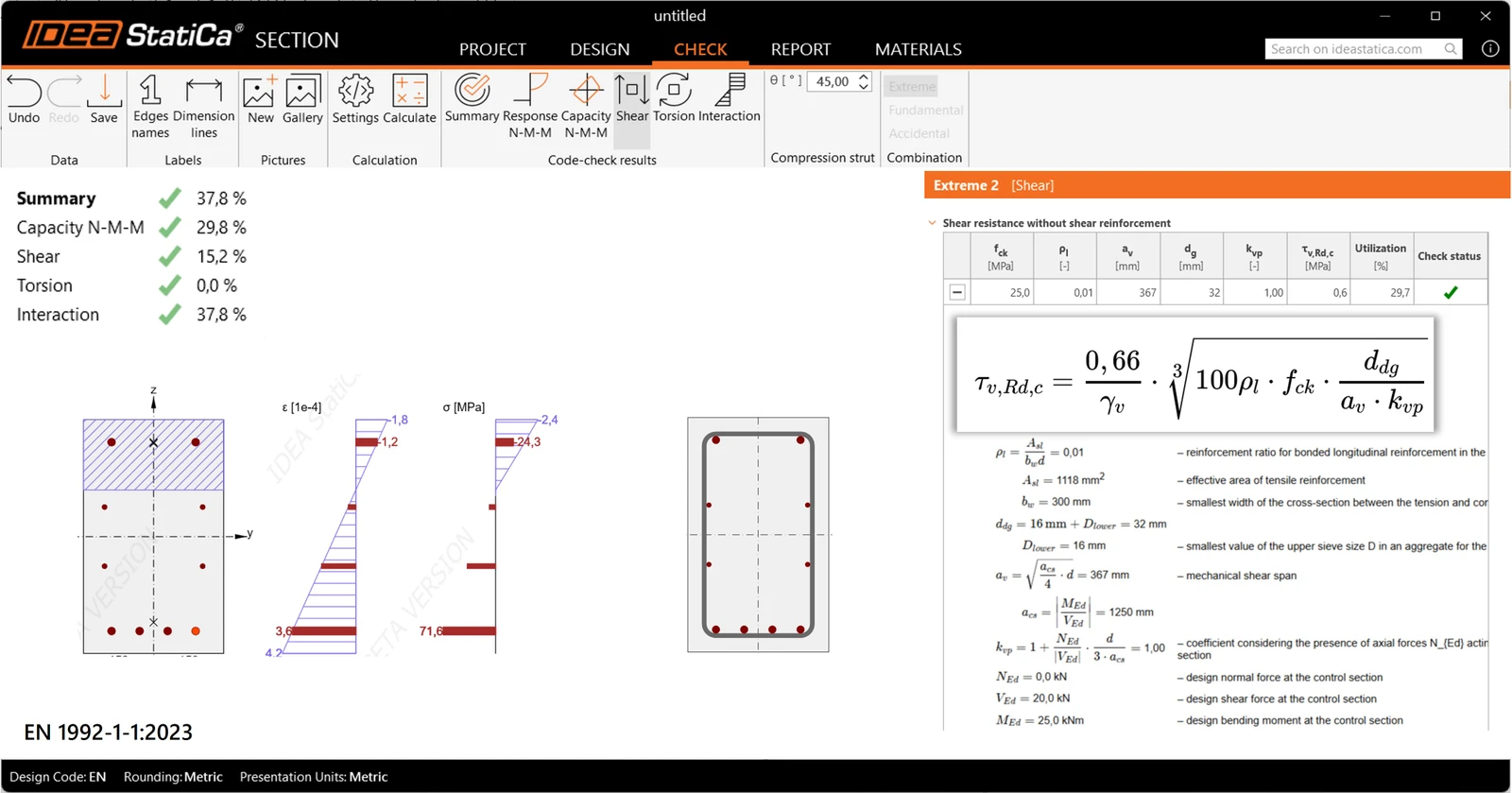
Figure 3: IDEA StatiCa Section displays each check according to EN 1992-1-1:2023 in formula form, along with all the parameters used.
By varying variables within the software—such as applying a different aggregate size, adjusting the section height, or changing the internal forces—the structural engineer can immediately see the effect each parameter has on the capacity and the required reinforcement. Because Section displays all checks as formulas, each result can be precisely traced back to the specific clause in the standard. This transparency makes it easier to understand the new Eurocode.
Shear force verification according to the new Dutch National Annex
IDEA StatiCa Section is the successor to IDEA StatiCa RCS and introduces the second generation of Eurocodes. RCS remains available for the current standard. Furthermore, the new shear force rules from the amendment NEN-EN 1992-1-1/ NB+A1:2020+A2:2025 have already been implemented in RCS. This allows the new expressions to be applied directly to the current standard, ensuring a gradual transition.
The tide is still going out. Those who use this time to familiarize themselves with the new rules will see the wave coming rather than being caught off guard by it. With the new shear force design already included in RCS and EN 1992-1-1:2023 available in Section, that transition can begin today.
Try IDEA StatiCa for free
Start your trial today and enjoy 14 days of full access and services free of charge.
Start free trial