
- How to export nodes and load cases from an ixCube 4-10 model into IDEA StatiCa
- Building mast, cable, and anchoring connections using operations, member LCS positioning, and DXF plate shapes
- Modeling one-bolt/one-pin connections, including boundary conditions and the bearing member
- Working with connection groups, templates, and batch calculations in Checkbot for faster repeat design
- Interpreting results, code checks, and generating a full connection report
- How to share your design via Viewer, links, and IFC export
WebinarSteelConnection designConnectionModelingEN (Eurocode)
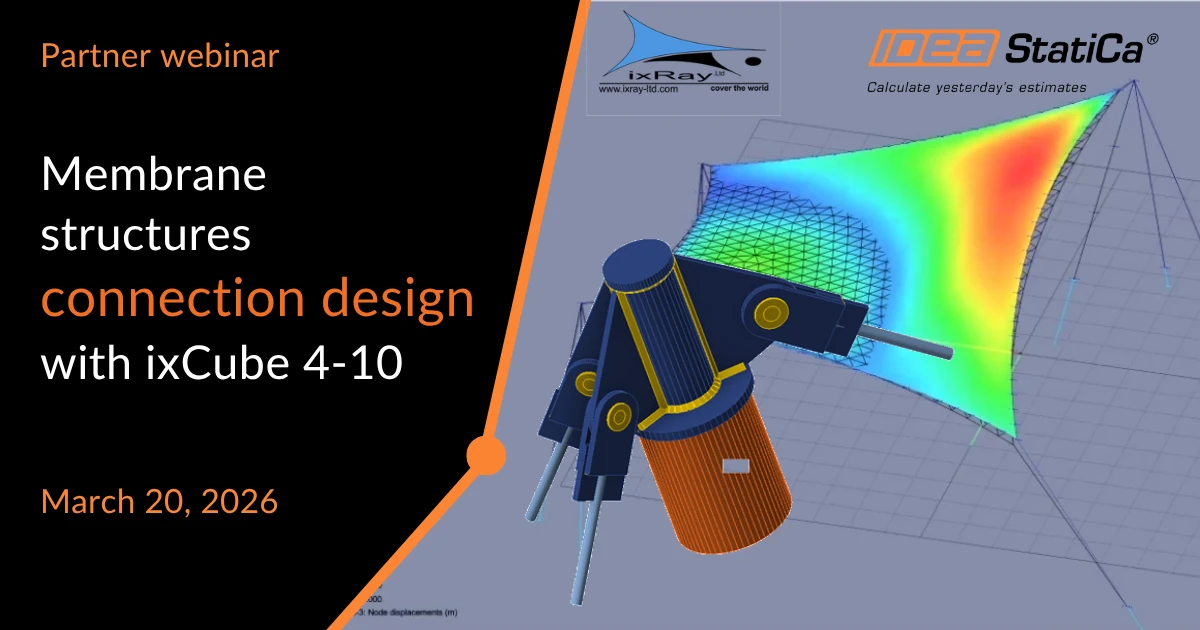
Membrane structures - connection design with ixCube 4-10
This webinar is also available in

Streamed on
(in your local time, 24-hour format)
Membrane structures rely on masts, cables, and their connecting hardware to transfer load safely into the supporting steelwork and foundations. Getting these joints right means combining accurate global analysis results with a detailed, code-checked model of the connection itself. This webinar shows the complete workflow, from exporting a structural model out of ixCube 4-10 to designing, checking, and reporting the steel connections in IDEA StatiCa.
Watch the webinar and learn about

Complex connections design in IDEA StatiCa
Designing connections for membrane structures brings a mix of unusual geometry, cables acting as tension-only members, and pin or single-bolt attachments that don't fit standard connection templates. This webinar walks through a real mast-and-cable structure, first analyzed in ixCube 4-10, then taken node by node into IDEA StatiCa to design and verify every connection along the way — from the mast top to the concrete anchorage.
From ixCube to Checkbot, and building the connection
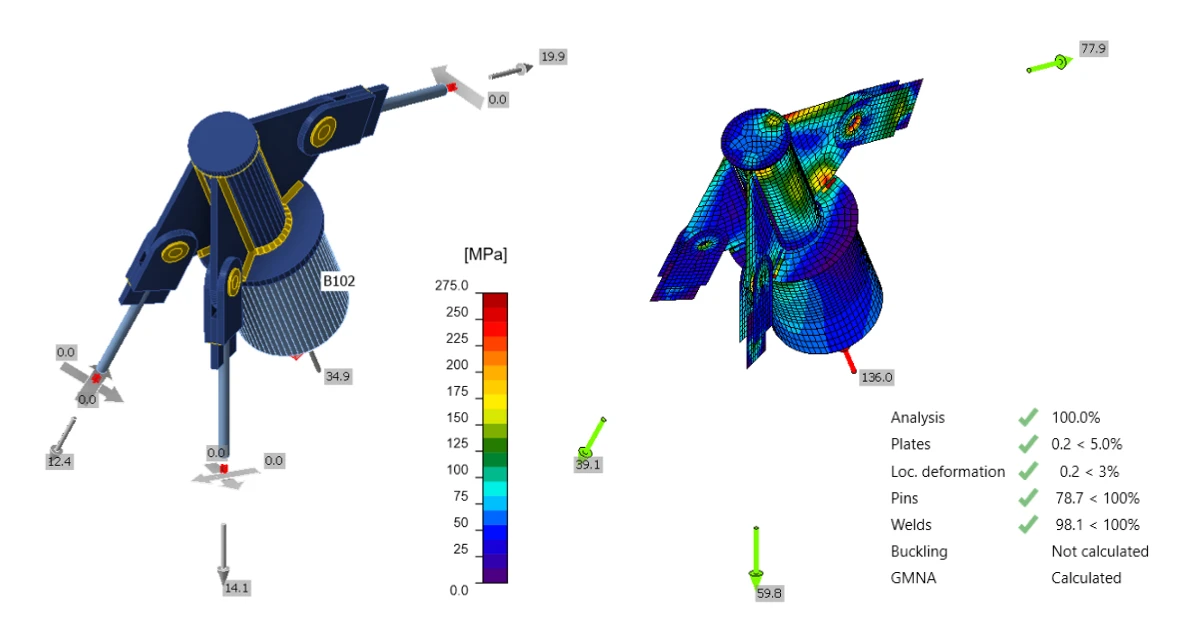
A node from the global model — with its members, cross-sections, and load combinations — is exported into Checkbot, where materials can be mapped and nodes grouped by geometry. In Connection, the mast top and cable anchorages are then built up with stiffening plates, tube members positioned via the member local coordinate system, custom DXF plate shapes, and gusset/pin assemblies simulating the cable tension instruments. Operations follow a strict sequence that mirrors real fabrication, so the modeling order matters throughout.
Pins, bearing member, and the base connection
One-bolt/one-pin members need their boundary conditions released so only normal and shear forces transmit, and the bearing member must be set deliberately rather than left to default. At the base, the webinar covers the base plate, anchor grid, and a simplified Winkler-spring concrete block, with the option to open the same model in IDEA StatiCa Detail for a full reinforced-concrete check with rebar and uplift.
Learn more about the ixCube 4-10 plugin: Supported Integrations - ixCube 4-10
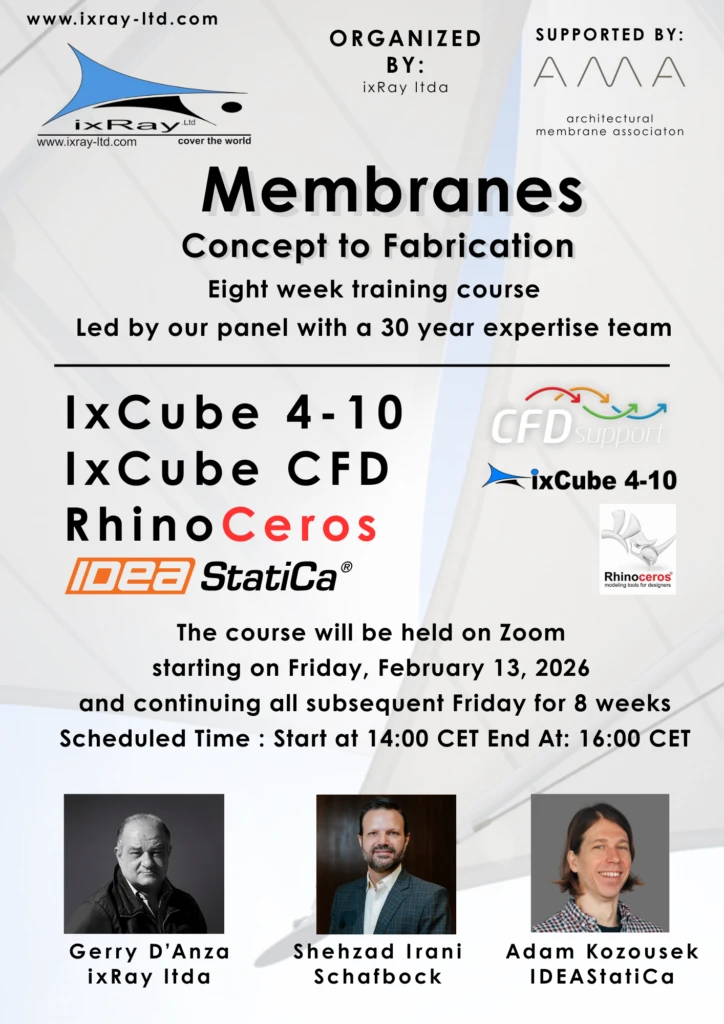
Membranes training course
This webinar was originally part of the Membranes: From Concept to Fabrication—8-Week Specialized Training course by ixRay Ltd., organized by Gery D'Anza.
Want to see more webinars on steel?
Learn more about the design of steel connections and structural members with IDEA StatiCa:
Attached Downloads
Download, review, and reuse the IDEA StatiCa project files: