


Description
In this study, the normal force resistance of circular hollow section (CHS) connections was investigated by comparing results from the component-based finite element method (CBFEM) against relevant European and American code standards (EN 1993-1-8 and AISC 360-22). Comparisons were also made with the draft of the new European code standard (Fpr EN 1993-1-8), which contains the latest state-of-the-art.
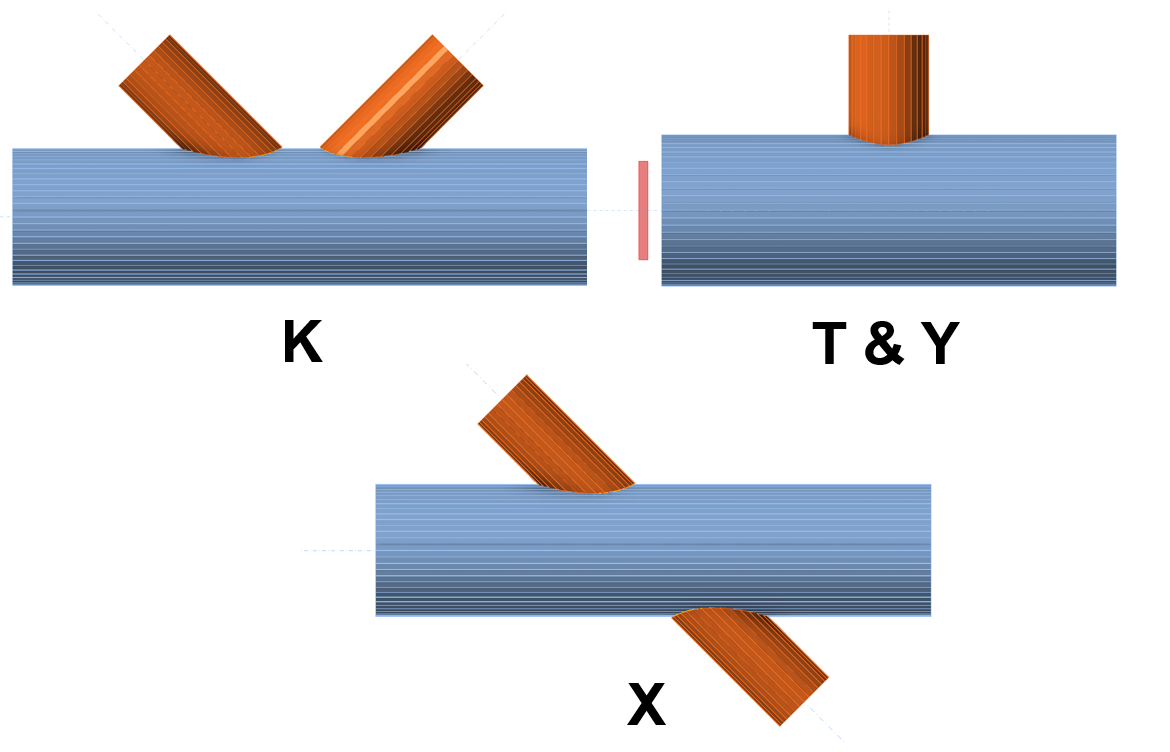
The study verified the full range of validity defined in the design codes. This range specifies the spectrum of connection cross-sections covered by the codes, based on geometric and material properties established through research and experimental investigations. For circular hollow sections (CHS), these properties include diameter, wall thickness, and steel grade. The range of validity ensures that only the intended failure modes govern the connection response; for example, it excludes cases where local buckling would influence connection resistance.
The study evaluated a large set of cross-section pairs using both code-based procedures and the component-based finite element method (CBFEM). Analyses included variations in geometric and material parameters, such as cross-section dimensions, steel grade, chord preloading, and brace angle. All computations were implemented with Python scripts and executed within a Python environment. CBFEM analyses were performed via the IDEA StatiCa Connection REST API.
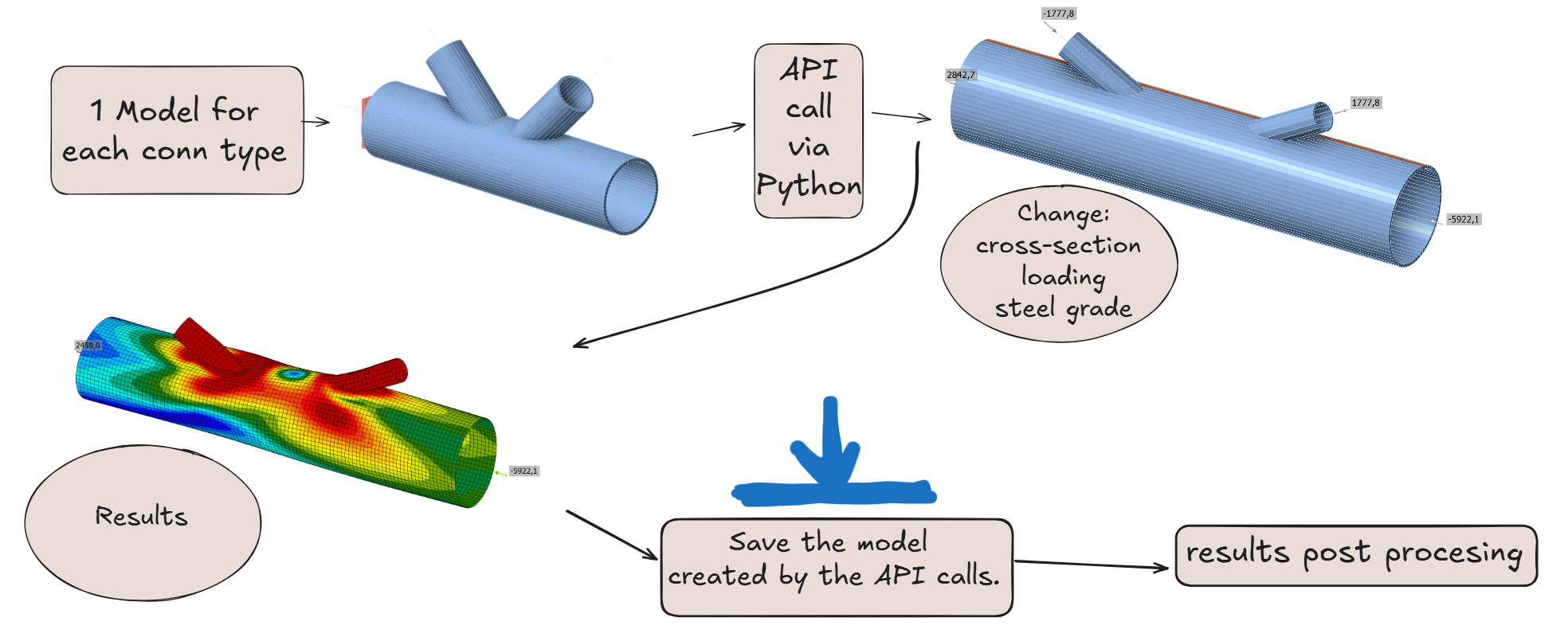
Results
EN 1993-1-8 and AISC 360-22 produce nearly identical results, as they are based on the same methodology. The draft standard Fpr EN 1993-1-8, however, introduces improvements for circular hollow section (CHS) connections. The draft predicts a generally less conservative resistance than EN 1993-1-8—by up to 55% for the selected parameters—and its results correlate better with the component-based finite element method (CBFEM).
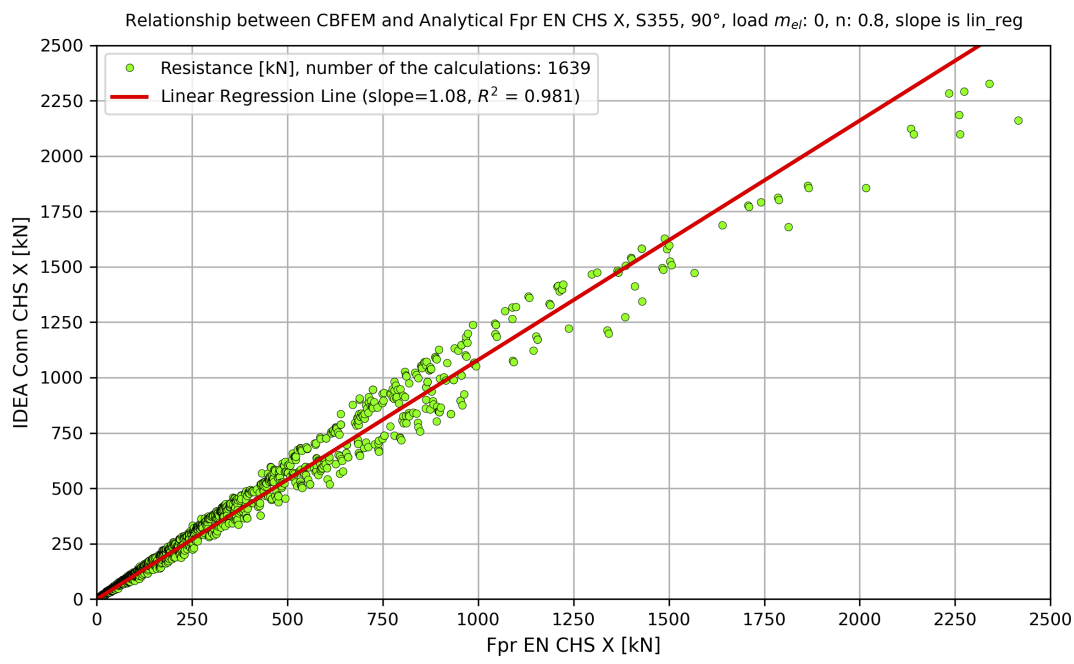
Example of X joint comparison of CBFEM to Fpr EN 1993-1-8 with normal stress in the chord
CBFEM results for cases without chord preloading generally align with the code provisions. When the chord member is preloaded, however, CBFEM results diverge from the codes. Further investigation will be performed to determine whether the codes’ current resistance reduction function for preloaded chords requires improvement.
Verification examples:
- Component-based finite element design of steel connections: book chapter CHS
- Component-based finite element design of steel connections: book chapter RHS
Access the full thesis here: Design of Hollow Joints: Comparison of design methods
GitHub with entire project: Design of Hollow Joints: Comparison of design methods